How to Design Idempotent ETL Jobs in AWS
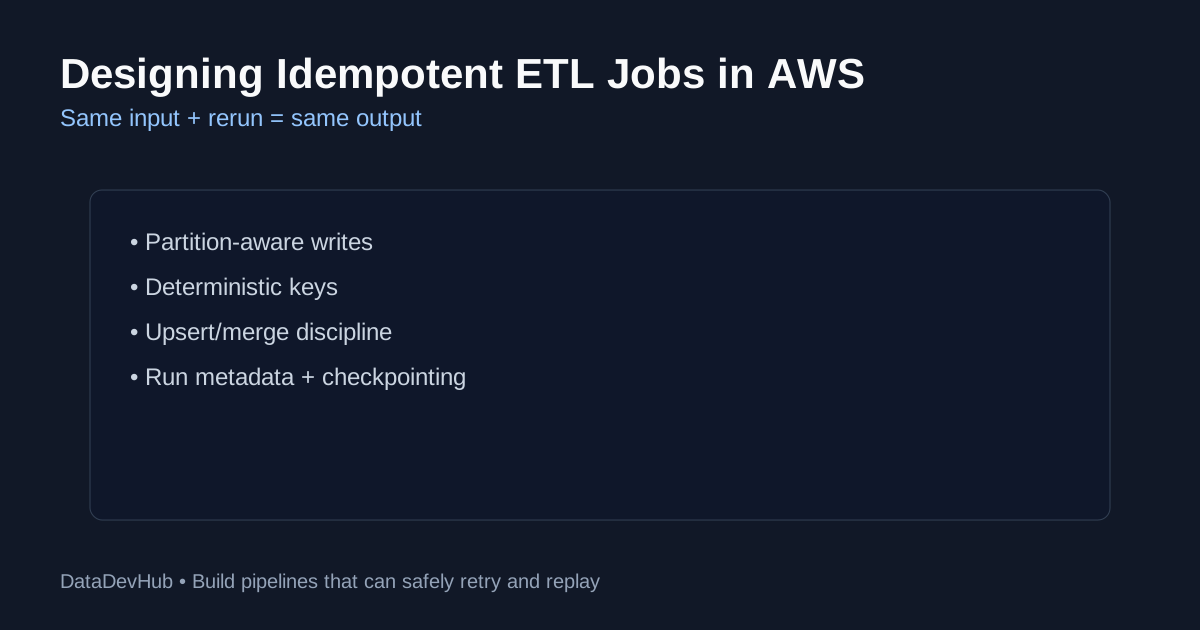
If your pipeline cannot be rerun safely, it is not production-ready.
Idempotency means:
Running the same job with the same input multiple times produces the same final output.
This is one of the most important reliability properties in ETL systems.
Why idempotency matters
Without idempotency:
- retries can duplicate records
- backfills can corrupt outputs
- incident recovery becomes manual and risky
With idempotency:
- retries are safe
- replay is predictable
- operations become calmer
Core design rules
- deterministic keys for business entities
- partition-aware write strategy
- clear upsert/merge logic
- run metadata and checkpoint tracking
- publish only after successful checks
Write strategy options
Option A: overwrite partition
Good for daily snapshot partitions.
- rewrite the specific partition atomically
- avoid appending duplicates
Option B: merge/upsert
Good for CDC/incremental entities.
- use business key + latest timestamp
- resolve conflicts deterministically
Example dedupe pattern (SQL)
1
2
3
4
5
6
7
8
9
10
11
WITH ranked AS (
  SELECT *,
         ROW_NUMBER() OVER (
           PARTITION BY order_id
           ORDER BY updated_at DESC
         ) AS rn
  FROM staging.orders_incremental
)
SELECT *
FROM ranked
WHERE rn = 1;
This ensures reruns keep stable final records.
Run metadata table (recommended)
Maintain a pipeline_runs table with:
- run_id
- dataset
- partition
- status
- started_at
- completed_at
- input checksum/version
This helps prevent accidental double-publish and supports replay audits.
Idempotency + orchestration
Step Functions should:
- check if partition already successfully published
- skip if already complete and unchanged
- rerun only when forced backfill is requested
This avoids accidental reprocessing loops.
Common anti-patterns
- append-only writes for mutable entities
- no unique business keys
- random UUIDs created during transform stage
- reruns with no run metadata tracking
Final take
Idempotency is not an advanced optimization.
It is a baseline reliability requirement for any serious data platform.
If your jobs can’t safely retry and replay, incident handling will always remain expensive.